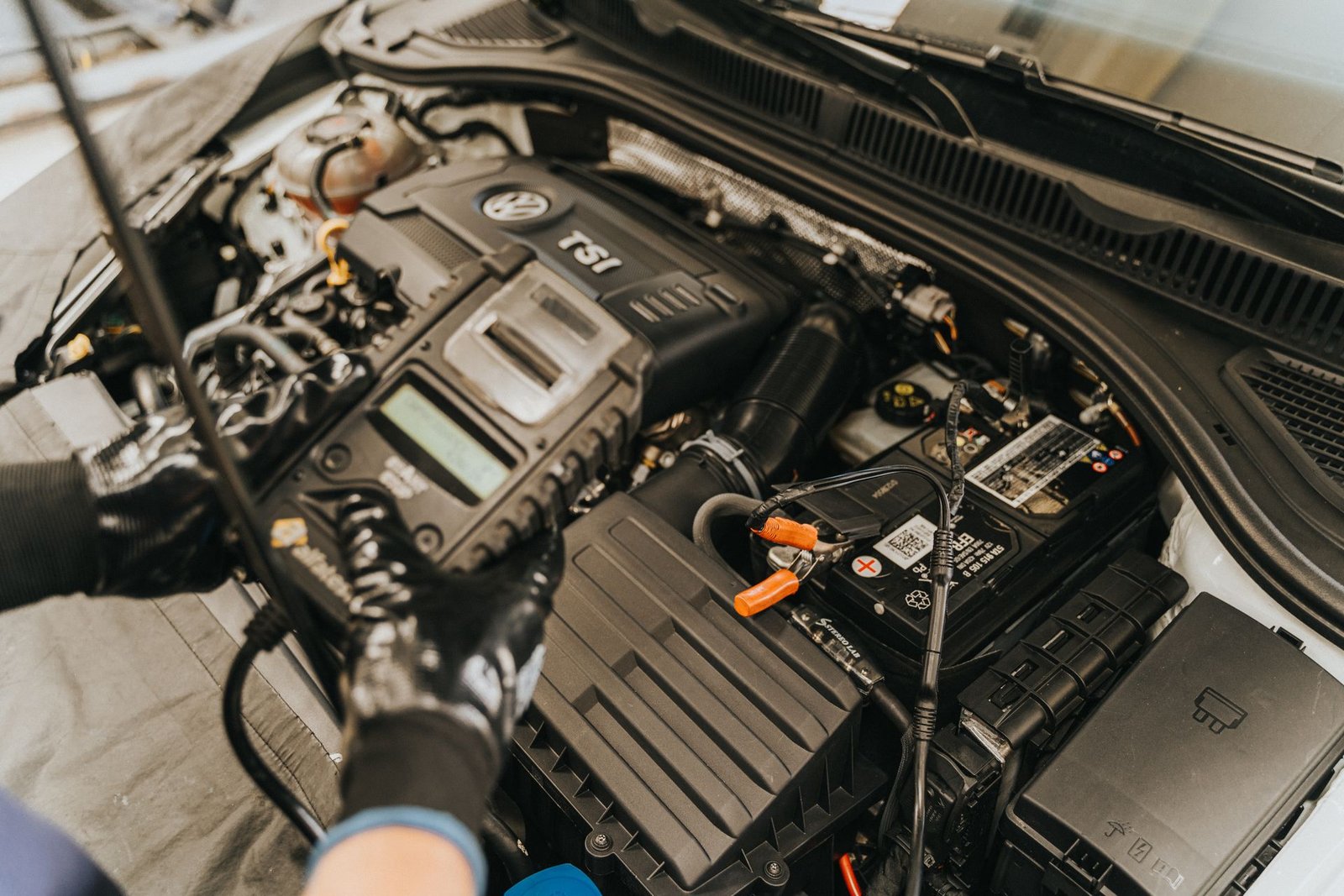
A car battery that fails suddenly is one of the most frustrating breakdowns — and one of the most preventable. Testing your battery takes less time than making coffee, and it can tell you weeks in advance whether you're about to be stranded.
In this guide, we walk you through the exact process US mechanics use to test a car battery, using only a digital multimeter you can buy at Harbor Freight, Home Depot, or Amazon for under $25.
Tools You Need
You don't need a professional load tester to get useful data. Here's what to have on hand:
| Tool | Typical US Price (2026) | Where to Buy |
|---|---|---|
| Digital Multimeter | $15 – $45 | Harbor Freight, Home Depot, Amazon |
| Safety Glasses | $5 – $15 | Harbor Freight, Home Depot |
| Work Gloves | $8 – $20 | Harbor Freight, Home Depot |
| Optional: Battery Load Tester | $30 – $65 | Harbor Freight, Amazon |
Step 1: Turn Off the Engine and All Accessories
Before testing, turn off the engine, headlights, radio, climate control, and any USB chargers. This ensures you're reading the battery's true resting voltage, not its "under load" voltage.
Wait 30 minutes after turning off the engine before testing. A battery that just finished charging will show artificially high voltage that drops within 30 minutes.
Step 2: Set Your Multimeter to DC Volts
Turn your multimeter's dial to DC Voltage (usually marked with a straight line and a dashed line: ⎓). Choose the 20V range or the closest setting above 12V.
⚠️ Never set it to AC voltage or a current/amperage setting. This can damage the meter and give you meaningless readings.
Step 3: Connect the Probes to the Battery
With the engine off and key removed from the ignition:
- Touch the red probe to the positive (+) terminal (usually red, marked "POS" or "+").
- Touch the black probe to the negative (–) terminal (usually black, marked "NEG" or "–").
- Hold both probes firmly against the metal posts. Do not touch the probes to each other.
Step 4: Read the Resting Voltage
With the probes connected, look at the multimeter display. Give it 2–3 seconds to stabilize.
✅ Healthy Battery
12.6V or higher
- 100% charged — no action needed
- Recheck in 3 months
⚠️ Needs Attention
12.0V – 12.5V
- 50–75% charged
- Charge overnight with a trickle charger
- Recheck after charging
Step 5: Perform a Cranking Test (Optional but Recommended)
This is the most important test — it tells you how the battery performs under real starting load.
- Keep the multimeter probes connected (red on +, black on –).
- Have a helper turn the key to start the engine (or press the start button).
- Watch the voltage reading as the engine cranks.
- Note the lowest number displayed during cranking.
| Cranking Voltage | What It Means |
|---|---|
| Above 10V | Healthy — battery is holding up under load |
| 9.6V – 10V | Borderline — have it load-tested professionally |
| Below 9.6V | Failing — replace soon to avoid being stranded |
Complete Car Battery Voltage Chart (US Reference)
Bookmark this chart. It's the same reference used by US mechanics.
| Voltage Reading | State of Charge | Action Needed |
|---|---|---|
| 12.73V+ | 100% | None — healthy |
| 12.62V | 90% | None |
| 12.50V | 80% | Monitor |
| 12.42V | 70% | Charge soon |
| 12.32V | 60% | Charge |
| 12.20V | 50% | Charge overnight |
| 12.06V | 25% | Charge immediately |
| 11.90V | 0% | Charge or replace |
| < 10.5V | Dead | Replace — see our US replacement cost guide |
Note: Readings should be taken 30 minutes after turning off the engine. Readings taken immediately after driving or charging will be artificially high.
Frequently Asked Questions
What should a car battery read on a multimeter?
A healthy, fully charged battery reads 12.6V or higher with the engine off. With the engine running, it should read 13.7V – 14.7V (indicating the alternator is charging).
Can I test a car battery without a multimeter?
Yes, but less accurately. You can use a load tester (free rental at AutoZone and O'Reilly) or observe symptoms like slow cranking and dim headlights. A multimeter is the cheapest accurate option.
How do I know if my battery is dead or just discharged?
A discharged battery reads 11.8V–12.4V and may recover after charging. A dead battery reads below 10.5V and won't hold a charge. Have it load-tested at any US auto parts store for free. If it's dead, see our US replacement cost breakdown.
How long does a car battery last in the US?
Typically 3–5 years. In hot states like Arizona, Texas, and Florida, batteries often fail in 2–4 years. In colder northern states, they last longer but struggle more in winter. For a side-by-side comparison of battery types, see our AGM vs. Lead-Acid guide.