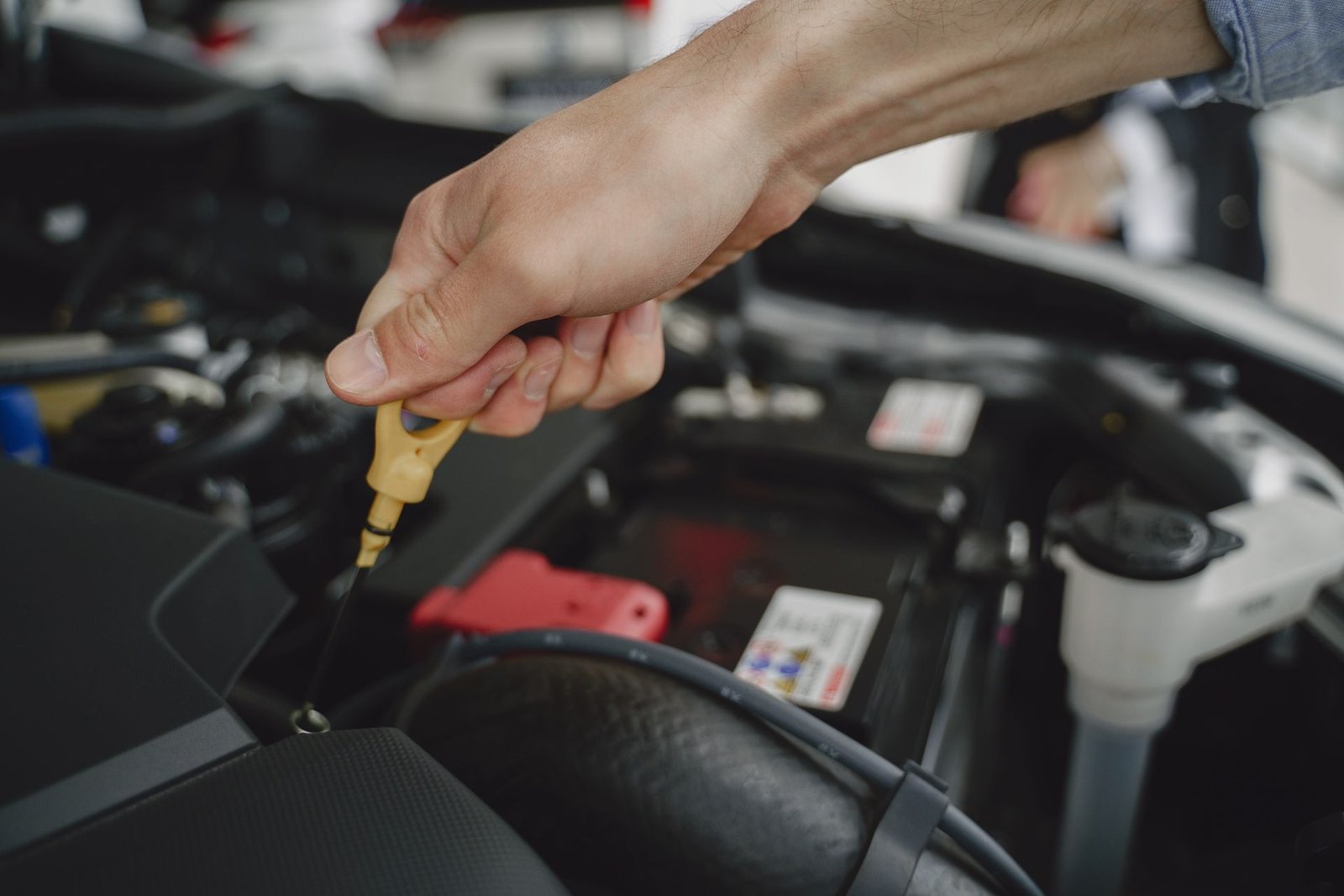
Transmission fluid is the lifeblood of your car's transmission — a $4,000–$6,000 component if it fails. Unlike oil changes, most drivers never think about it until the transmission starts slipping or shifting hard.
Checking the fluid takes 10 minutes and requires no tools. Here's exactly how to do it — plus how to read the color and smell like a mechanic.
Why Transmission Fluid Matters
Transmission fluid serves three critical functions:
- Lubricates the hundreds of moving parts inside the transmission
- Cools the transmission — heat is the #1 killer of automatic transmissions
- Transmits power in automatic transmissions (fluid pressure is what shifts gears)
Low or degraded transmission fluid can cause:
- Slipping gears (engine revs, but car doesn't accelerate)
- Hard or delayed shifts
- Rough or jerky engagement
- Whining or grinding noises
- Eventually: complete transmission failure ($4,000–$6,000 repair)
- Fluid flush: $150–$300
- Filter + fluid change: $200–$400
- Solenoid replacement: $500–$1,500
- Full rebuild: $2,500–$4,500
- Full replacement: $4,000–$6,000+
Does Your Car Have a Transmission Dipstick?
Modern cars — especially in the US — are increasingly built with "sealed" or "lifetime" transmissions that have no user-accessible dipstick. Common examples include:
- Most BMWs (2006+)
- Most Mercedes-Benz (2010+)
- Many newer Fords (2013+)
- Toyota hybrids
- Most CVT-equipped vehicles
Tools You Need
| Item | US Price | Where to Buy |
|---|---|---|
| Clean white rag or paper towel | $0 – $2 | Any US grocery store |
| Funnel (if adding fluid) | $3 – $6 | AutoZone, Amazon |
| Correct transmission fluid | $8 – $20 per quart | AutoZone, O'Reilly, Walmart |
Fluid type matters. Check your owner's manual for the exact spec — it might be ATF+4, Dexron VI, Mercon V, CVT fluid, or a brand-specific formulation. Using the wrong type can destroy your transmission.
Step 1: Warm Up the Transmission
Transmission fluid expands when warm, and the dipstick marks are calibrated for warm operation. So:
- Drive the car for 10–15 minutes at city speeds, OR
- Let it idle in Park for 10 minutes with the A/C on, OR
- Drive a mix of stop-and-go and 35–45 MPH for a short trip
The transmission should reach normal operating temperature (~180–200°F). If you just started the car cold, the fluid will read artificially low.
Step 2: Park on Level Ground and Cycle Gears
- Park on flat, level ground — sloped ground gives false readings.
- Set the parking brake firmly.
- With your foot on the brake, cycle through all gears: P → R → N → D → 2 → 1, pausing 2–3 seconds in each.
- Return the shifter to Park (or Neutral for manuals).
- Leave the engine running — this is critical for automatics.
Step 3: Locate the Transmission Dipstick
Open the hood and find the transmission dipstick. It's often:
- Marked with a yellow or red handle
- Labeled "Trans" or with a gear icon
- Located at the back of the engine bay, closer to the firewall
Don't confuse it with the engine oil dipstick, which is usually yellow with an oil-can icon. If you have both, the transmission dipstick is usually shorter and closer to the driver's side on most US cars.
Step 4: Pull the Dipstick and Read the Color
- Pull the dipstick out and wipe it clean with a white rag.
- Look at the color left on the rag — this tells you the fluid's condition.
- Note the smell — transmission fluid should smell slightly sweet or neutral, NOT burnt.
Color is the single most important diagnostic signal. See the chart below.
Step 5: Reinsert the Dipstick and Read the Level
- Reinsert the dipstick fully — all the way down.
- Pull it out again and look at the fluid level against the marks.
- Most dipsticks have HOT and COLD ranges (with two marks each).
- If the engine is warm, the fluid should be between the HOT marks.
- If the fluid is below the lower mark, you need to add fluid.
Step 6: Add Fluid If Needed (With Caution)
If the level is low, you can add fluid yourself — but follow these rules strictly:
- Use the exact fluid specified in your owner's manual. Never mix ATF+4 with Dexron VI, or Mercon V with CVT fluid. Mixing can cause $2,000–$5,000 in damage.
- Insert a clean funnel into the dipstick tube.
- Add fluid in small increments (½ pint at a time).
- Wait 30 seconds, re-check the level, and repeat if still low.
- Do NOT overfill. Overfilling causes foaming, overheating, and seal damage.
Transmission Fluid Color Chart
This is the same chart US transmission mechanics use. Memorize the colors — they tell you almost everything.
| Color | What It Means | Action |
|---|---|---|
| Red / Pink / Translucent | New or healthy fluid | Nothing — this is ideal |
| Light Brown | Aging but still functional | Schedule a fluid change soon |
| Dark Brown | Overdue for a change | Get a transmission fluid flush within 1,000 miles |
| Black (with burnt smell) | Transmission is being damaged internally | Stop driving. Have a transmission shop diagnose it immediately |
| Milky / Pinkish-white | Coolant has mixed with fluid (blown transmission cooler) | Stop driving. This is a serious, urgent repair |
| Foamy / Bubbly | Overfilled, or air is being drawn in | Check level and have the system inspected |
5 Mistakes to Avoid
- Checking when cold. Transmission fluid must be warm to give an accurate reading. Cold fluid reads low on the dipstick even if the level is fine.
- Skipping the gear cycle. Not cycling through all gears before checking gives a falsely high reading.
- Mixing fluid types. Even a small amount of the wrong fluid can destroy a transmission. Always use the exact spec in your manual.
- Overfilling. Overfilled transmission fluid foams and can't lubricate properly — leading to overheating and seal failure. Add slowly and re-check.
- Ignoring a burnt smell. Burnt smell = internal damage. It won't fix itself. Get it diagnosed before it becomes a $4,000 rebuild.
Transmission fluid is one of several vital fluids to check regularly. For related maintenance guidance, see our oil change cost guide and battery replacement cost guide.
Frequently Asked Questions
What color should transmission fluid be?
New automatic transmission fluid is reddish-pink and translucent. As it ages, it darkens to brown. Dark brown or black fluid means it's overdue for a change. Milky or pinkish-white fluid means coolant has mixed with the fluid — a serious problem.
How often should I check transmission fluid?
Check at least once a month and before any long road trip. Most US vehicles need a transmission fluid change every 30,000–60,000 miles. Some newer cars use "lifetime" fluid that shouldn't be checked by the owner — check your manual.
Can I just add transmission fluid if it's low?
Yes — but only if you use the exact fluid type in your owner's manual. Mixing different types (ATF+4, Dexron VI, Mercon V, CVT) can cause severe damage. Also, if the fluid is low, find out why — transmission fluid doesn't burn off. A leak is the usual cause.
Why does my transmission fluid smell burnt?
A burnt smell means the fluid has overheated and the transmission is being damaged internally. Stop driving and have a transmission shop diagnose it ($100–$200). Continuing to drive typically leads to a $2,000–$5,000 replacement.
What if my car doesn't have a transmission dipstick?
Many modern US cars (BMWs, newer Fords, CVT-equipped vehicles) don't have a dipstick. Checking the fluid requires a shop with special tools. Do NOT try to access the fluid yourself — you can void your warranty or introduce contaminants.