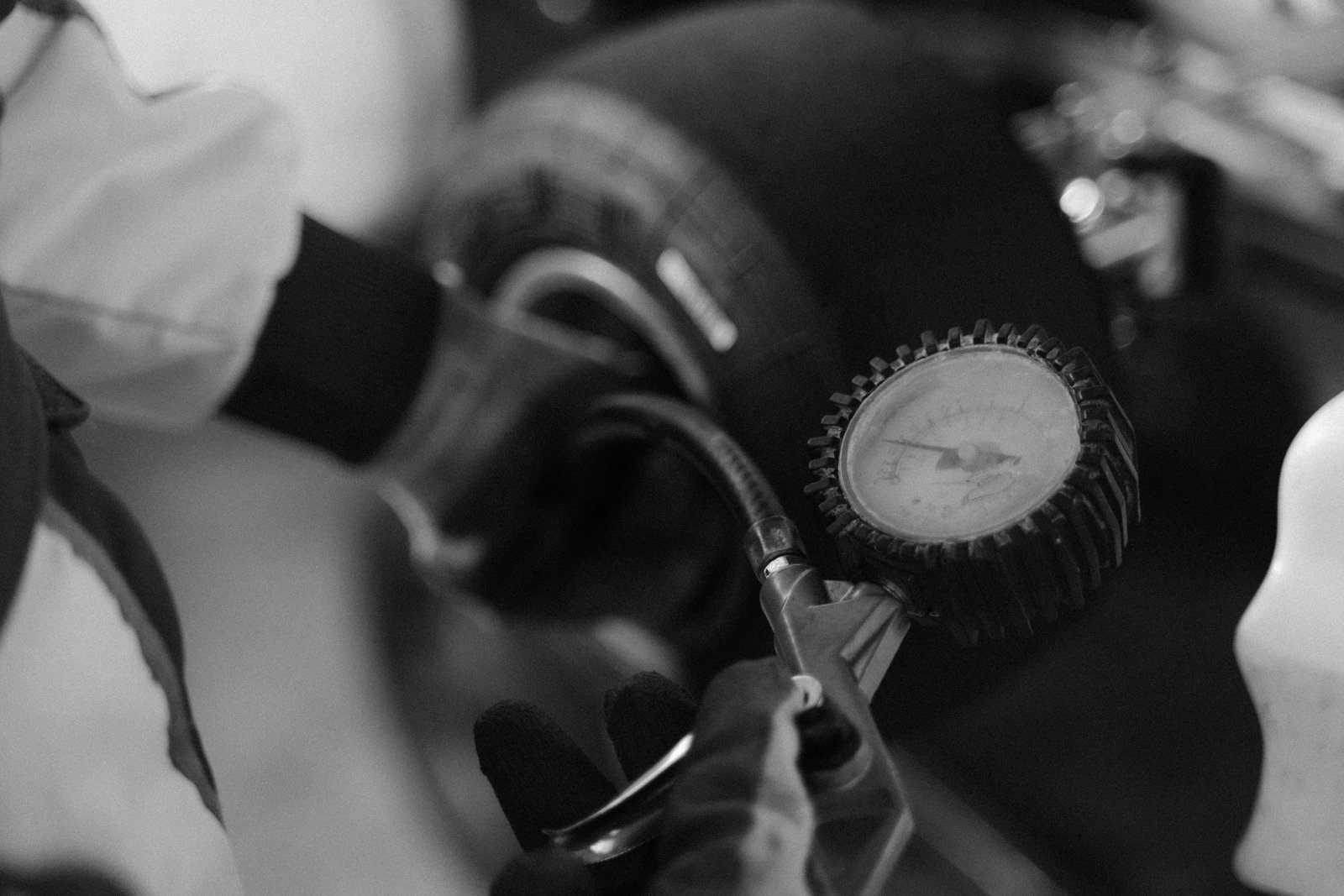
Tire pressure is the most ignored maintenance item on any US car — and the one with the best return on investment. Properly inflated tires last 20% longer, improve fuel economy by 3%, and make your car safer in every emergency maneuver.
You need a quality tire pressure gauge to make that happen. But not all gauges are accurate — cheap gas station gauges can be off by 3–5 PSI, which is enough to cause uneven tire wear or a blowout. We tested the best gauges of 2026 on real vehicles — here are our top 5.
Our Top Pick: AstroAI Digital Tire Pressure Gauge
Typical price: $10 – $15 on Amazon.
The AstroAI is the most popular tire pressure gauge in the US for good reason. It's cheap, accurate, and easy to read — even in a dark parking lot. If you're buying one tire pressure gauge and never want to think about it again, this is it.
Quick Comparison: 2026 US Prices
| Rank | Gauge | Type | US Price | Best For |
|---|---|---|---|---|
| 1 | AstroAI Digital | Digital | $10 – $15 | Most US drivers |
| 2 | JACO ElitePro Digital | Digital | $25 – $35 | Premium accuracy |
| 3 | AstroAI 12V Compressor | Digital + inflator | $30 – $45 | Inflate + check combo |
| 4 | Milton S-921 Pencil | Analog pencil | $8 – $12 | Budget / glovebox |
| 5 | Vondior Heavy Duty | Analog dial | $15 – $22 | Trucks & SUVs |
1. AstroAI Digital Tire Pressure Gauge — Best Overall
US Price: $10 – $15
Type: Digital, battery-powered
Accuracy: ±0.5 PSI
Units: PSI, BAR, kPa, kg/cm²
Where to Buy: Amazon, Walmart
The AstroAI Digital is the most-reviewed tire pressure gauge on Amazon for good reason: it delivers professional-grade accuracy at a budget price. The backlit LCD makes it easy to read in the dark, and the rubberized grip feels solid in your hand.
Why we recommend it:
- ±0.5 PSI accuracy — far better than cheap stick gauges
- Backlit LCD display — easy to read at night
- Switches between PSI, BAR, kPa, and kg/cm²
- Auto shut-off preserves battery life (2 AAA batteries)
- Compact — fits in a glove box or door pocket
- Under $15 on Amazon
Drawbacks:
- Requires batteries — can fail if left uncharged for years
- Rubber seal can wear out over 3–5 years of frequent use
- Not designed for heavy-duty truck tires (over 100 PSI)
2. JACO ElitePro Digital — Best Premium
US Price: $25 – $35
Type: Digital, battery-powered
Accuracy: ±0.5 PSI certified
Units: PSI, BAR, kPa
Where to Buy: Amazon, JACO Direct
The JACO ElitePro is the gauge that professional mechanics carry. It's certified to ±0.5 PSI accuracy (with a printed calibration certificate), has a shock-resistant rubber housing, and the air chuck is a genuine brass unit — not plastic.
Why we recommend it:
- Certified ±0.5 PSI accuracy — with calibration certificate in the box
- Shock-resistant rubber housing (survives drops)
- Brass air chuck — won't crack like cheap plastic
- Backlit LCD with auto shut-off
- Comes with a lifetime warranty (rare for gauges)
- Used by US shops and dealerships
Drawbacks:
- 2× the price of the AstroAI
- Bulkier — doesn't fit as easily in a glove box
- Overkill for casual tire checkers
3. AstroAI 12V Portable Air Compressor — Best Combo
US Price: $30 – $45
Type: Digital inflator + gauge
Accuracy: ±1 PSI
Power: 12V car outlet
Where to Buy: Amazon
If you're tired of driving to a gas station to add air, the AstroAI 12V Portable Air Compressor is the answer. It plugs into your car's 12V outlet, has a built-in digital gauge, and can inflate a tire from 0 to 35 PSI in about 3–4 minutes depending on tire size.
Why we recommend it:
- Inflates AND measures — one tool does it all
- Preset target pressure — auto-shuts off when reached
- LED flashlight for nighttime use
- 12V car outlet powered — no charging needed
- Fits in a trunk or under a seat
- Saves you $0.50–$1.50 per gas station visit
Drawbacks:
- Slower than gas station compressors (3–4 min per tire)
- Only ±1 PSI accuracy (not as precise as the AstroAI handheld)
- Can overheat if used on 4 tires in a row — let it cool
- Not suitable for large truck tires (over 60 PSI)
4. Milton S-921 Pencil Gauge — Best Budget Analog
US Price: $8 – $12
Type: Analog pencil gauge
Accuracy: ±2 PSI
Units: PSI (dual-scale models available)
Where to Buy: Amazon, AutoZone, Walmart
The Milton S-921 is the classic pencil-style tire pressure gauge — simple, durable, and made in the USA. It uses no batteries, doesn't need calibration, and will still work in 20 years.
Why we recommend it:
- Under $12 — cheapest quality option
- No batteries, no electronics — just works
- Made in the USA (Milton is a US company since 1943)
- Durable brass and steel construction
- Great backup for a glove box or emergency kit
- 30 PSI readable in a single glance
Drawbacks:
- Only ±2 PSI accuracy (vs. ±0.5 for digital)
- Harder to read in low light
- No backlight or auto shut-off (because no power)
- Some users struggle to press it onto the valve stem correctly
5. Vondior Heavy Duty — Best Truck & SUV Gauge
US Price: $15 – $22
Type: Analog dial gauge
Accuracy: ±1 PSI
Units: PSI
Where to Buy: Amazon
The Vondior Heavy Duty is a dial-style analog gauge designed for trucks, SUVs, and RVs. Its 2-inch dial reads up to 100 PSI, making it suitable for tires that would exceed the range of budget digital gauges.
Why we recommend it:
- Reads up to 100 PSI — suitable for trucks and RVs
- Large 2-inch dial — easy to read at a glance
- Rubberized protective boot — survives drops
- Precision brass air chuck (holds onto the valve stem)
- No batteries required
- Cheaper than professional-grade digital dial gauges
Drawbacks:
- Only ±1 PSI accuracy (vs. ±0.5 for digital)
- Dial can be hard to read from certain angles
- No backlight — harder to read at night
Digital vs. Analog Tire Pressure Gauges
There are two main types of tire pressure gauges: digital and analog. Both work — but they have different strengths:
| Feature | Digital | Analog |
|---|---|---|
| Accuracy | ±0.5 PSI | ±1–2 PSI |
| Ease of reading | Very easy (LCD) | Moderate (dial or slider) |
| Night readability | Backlit | Requires external light |
| Battery required | Yes (2 AAA usually) | No |
| Durability | 3–5 years | 10+ years |
| Price | $10 – $35 | $8 – $22 |
| Best for | Daily use, precision | Emergency kits, backups |
How to Use a Tire Pressure Gauge (60 Seconds)
- Find the correct PSI on the sticker in your driver's side door jamb (NOT on the tire sidewall).
- Check tires when they're COLD — before driving more than 1 mile.
- Remove the black valve cap from the tire's valve stem.
- Press the gauge firmly onto the valve stem. You'll hear a brief hiss of air — this is normal.
- Hold steady for 2–3 seconds and read the number.
- Compare to the recommended PSI. Add air if low, release air if high.
- Replace the valve cap and repeat on all four tires.
For a complete walkthrough with recommended PSI by vehicle type, see our step-by-step tire pressure guide. If you're changing a tire instead, see our how to change a tire guide.
Frequently Asked Questions (US)
What is the best tire pressure gauge?
The AstroAI Digital Tire Pressure Gauge is the best overall for most American drivers in 2026. It costs $10–$15, reads to ±0.5 PSI accuracy, works in both PSI and BAR, and has a backlit display. For a premium option, the JACO ElitePro Digital is the best upgrade.
Are digital or analog tire pressure gauges more accurate?
Digital gauges are generally more accurate. A quality digital gauge reads to ±0.5 PSI, while analog gauges can be off by 2–3 PSI. Digital gauges are also easier to read. However, cheap stick gauges can be surprisingly accurate — test against a known-good gauge.
How often should I replace my tire pressure gauge?
Replace a digital gauge every 3–5 years, or sooner if dropped or exposed to extreme temperatures. Analog stick gauges rarely wear out but should be replaced if readings seem off. Test digital gauges against a known-good gauge after any drop.
Can I use a tire pressure gauge at the gas station?
Yes — but gas station gauges are usually less accurate than a quality handheld gauge. Best approach: use the gas station pump to add air, then verify with your own digital gauge. Costs about $0.50–$1.50 per use and saves you $20–$40 per tire service visit.
What PSI should a tire pressure gauge read?
The correct PSI is specific to your vehicle and is listed on the sticker inside your driver's side door jamb. Most US passenger cars need 30–35 PSI, SUVs and light trucks need 35–40 PSI, and heavy-duty trucks need 50–80 PSI. Never use the number molded on the tire's sidewall.