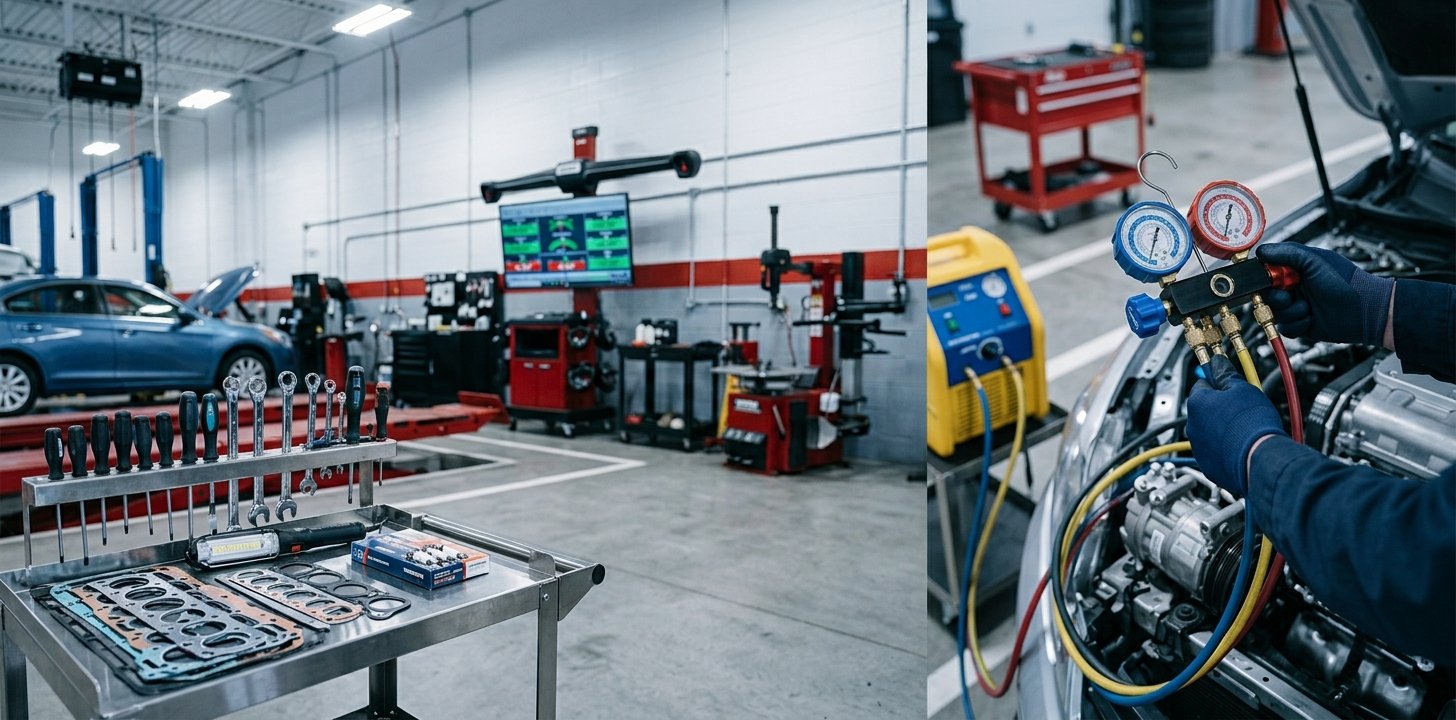
If your car's AC isn't blowing cold, a recharge is the first thing most shops will recommend. But here's the truth: AC systems are sealed. If your refrigerant is low, it's leaking — and a recharge without fixing the leak will only last weeks or months.
Here's exactly what an AC recharge should cost in the US in 2026, why R-1234yf systems cost twice as much as older R-134a, and when you actually need a recharge vs. a full AC repair.
How Much Does a Car AC Recharge Cost in 2026?
A car AC recharge costs $150 to $400 in the US in 2026. R-134a systems (pre-2017 cars) run $150–$250. R-1234yf systems (2017+ cars) run $250–$400 because the refrigerant costs 4–6× more per pound.
The price comes down to three things: which refrigerant your car uses, how many pounds of refrigerant the system holds, and whether the shop charges a separate diagnostic fee. A small sedan with a leaking seal and a 1.5-lb R-134a system is on the cheap end. A modern SUV with a 2.5-lb R-1234yf system plus a compressor replacement is on the expensive end.
R-134a vs. R-1234yf: Why One Costs Twice as Much
This is the single biggest factor in AC recharge pricing — and the one most drivers don't know about until they get the bill.
| Refrigerant | Vehicles | Cost Per Pound | Recharge Cost |
|---|---|---|---|
| R-134a | Most cars built before 2017 | $8 – $15 | $150 – $250 |
| R-1234yf | Most cars built 2017 and later | $40 – $80 | $250 – $400 |
| R-12 (legacy) | Vehicles built before 1994 | $50 – $150 | $300 – $600+ |
Why the difference? In 2017, the EPA required US automakers to switch to R-1234yf because it has a much lower global warming potential than R-134a. R-1234yf is more expensive to manufacture, requires different handling equipment, and is chemically different — you can't use one refrigerant in a system designed for the other.
How Much Refrigerant Does Your Car Hold?
Most passenger vehicles hold 1.5 to 2.5 pounds of refrigerant. Here's the typical range:
| Vehicle Type | Refrigerant Capacity | R-134a Recharge | R-1234yf Recharge |
|---|---|---|---|
| Compact sedan | 1.2 – 1.8 lb | $130 – $200 | $220 – $350 |
| Midsize sedan | 1.5 – 2.0 lb | $150 – $230 | $250 – $375 |
| SUV / Crossover | 1.8 – 2.5 lb | $175 – $270 | $280 – $420 |
| Full-size truck / SUV | 2.2 – 3.0 lb | $200 – $300 | $300 – $450 |
Note: These are street prices at a US shop, including labor. If a shop quotes you a "per pound" rate, multiply by your vehicle's capacity plus a $50–$80 labor charge.
AC Recharge Cost by Shop (2026 US)
Where you get the recharge done matters. Here's how the major US options compare for a standard R-134a recharge (typical midsize sedan, ~1.8 lbs of refrigerant):
| Shop | R-134a Recharge | R-1234yf Recharge | Notes |
|---|---|---|---|
| Independent Shop | $150 – $220 | $250 – $350 | Best value. Ask about leak test inclusion. |
| Jiffy Lube | $180 – $270 | $280 – $400 | Common AC recharge specials in summer. |
| Firestone / Midas | $180 – $250 | $280 – $375 | Look for coupons before booking. |
| Pep Boys / AAMCO | $170 – $240 | $270 – $360 | Common AC service specials in summer. |
| Dealership | $220 – $320 | $320 – $450 | Most expensive. Uses OEM refrigerant. |
Get a Leak Test First — Recharges Alone Don't Fix Leaks
This is the most important section in this guide. AC systems are sealed — unlike engine oil, refrigerant doesn't burn off or wear out. If your refrigerant level is low, there's a leak, and a recharge alone will only fix the symptom temporarily.
❌ Recharge Only
$150 – $400
- AC works cold for 2–8 weeks
- Refrigerant leaks out again
- You'll be back in the shop
- Total spent over a year: $300–$800
- Risk of compressor damage from low refrigerant
✅ Leak Test + Repair + Recharge
$300 – $1,200
- Leak identified and fixed
- AC stays cold for years
- One visit, done right
- Prevents compressor damage
- Most shops include a recharge in the repair price
Common leak locations:
- O-rings and seals — age-related failures; cheapest to fix ($50–$200)
- Condenser — road debris damage; $300–$700 to replace
- Compressor shaft seal — often requires compressor replacement ($500–$1,200)
- Evaporator — inside the dashboard; labor-intensive ($800–$1,500)
- AC lines and hoses — cracks and pinches; $150–$500
DIY vs. Shop AC Recharge
DIY AC recharge kits are everywhere — AutoZone, Walmart, Amazon. Here's the honest take on when they work and when they don't:
🛠️ DIY Recharge Kit
$40 – $80
- ✅ Cheap
- ✅ Takes 15–30 minutes
- ✅ Works for slight top-offs
- ⚠️ Only works on R-134a systems (pre-2017)
- ⚠️ Can't fix leaks
- ⚠️ Risk of overcharging → compressor damage
- ⚠️ Doesn't measure oil or system pressure properly
🔧 US Shop Recharge
$150 – $400
- ✅ Includes leak test
- ✅ Measures proper pressure and oil levels
- ✅ Handles R-134a and R-1234yf
- ✅ Warranty on the service
- ✅ Environmentally compliant refrigerant recovery
- ⚠️ Costs 3–5× a DIY kit
Bottom line for DIY: If you have an older car with R-134a and the AC is only slightly weak, a $40–$60 DIY top-off kit can buy you a few months. But if the AC is completely dead, or if the system is more than a few ounces low, you need a shop.
How Much to Fix AC in a Car (Full Breakdown)
"AC recharge" is only one part of the story. Here's what US drivers actually pay to fix car AC — from a simple top-off to a full compressor replacement:
| Problem | Typical US Cost | Frequency |
|---|---|---|
| Simple recharge (no leak) | $150 – $400 | Rare — most low-refrigerant cases involve a leak |
| Recharge + leak test | $230 – $600 | Most common AC service |
| Leak repair (O-ring, seal) | $150 – $400 | Common on older vehicles |
| AC hose / line replacement | $200 – $500 | Common |
| Condenser replacement | $400 – $900 | Road debris damage |
| Expansion valve / orifice tube | $250 – $600 | Blockage-related failure |
| Compressor replacement | $900 – $1,500 | Major failure |
| Evaporator replacement | $800 – $1,500 | Dashboard removal required |
| Blower motor replacement | $200 – $600 | Often misdiagnosed as AC issue |
Realistic expectation: Most US drivers who think they just need a recharge end up spending $250–$600 to actually fix their AC. That covers a leak test, a small leak repair (typically an O-ring or seal), and the recharge itself.
Why Your AC Isn't Cold: The 5 Most Common Causes
Before you authorize a recharge, understand what's actually wrong. These are the 5 causes a US shop sees most often:
- Low refrigerant from a leak. Most common cause. A leak test will find it. Refrigerant doesn't evaporate — if it's low, it's leaking.
- Failed AC compressor clutch. The clutch engages the compressor when you turn on the AC. When it fails, the compressor never runs — no cold air. Repair: $300–$600.
- Clogged expansion valve or orifice tube. Blocks refrigerant flow. AC may blow cold intermittently or stop entirely. Repair: $200–$500.
- Bad pressure switch. Tells the compressor when to engage and disengage. A failed switch can prevent the AC from ever cooling. Repair: $150–$400.
- Blower motor failure. If the blower motor isn't working, cold air can't reach the cabin. Often misdiagnosed as an AC problem. Repair: $200–$600.
Common AC Repairs (Beyond Recharge)
If a leak test reveals a problem, here's what the fix costs in the US in 2026:
| Repair | Typical US Cost | Notes |
|---|---|---|
| Leak test + recharge | $150 – $400 | Diagnostic + refrigerant |
| O-ring / seal replacement | $150 – $400 | Cheapest leak fix |
| AC hose / line replacement | $200 – $500 | Common on older cars |
| Condenser replacement | $400 – $900 | Road debris damage |
| Expansion valve replacement | $250 – $600 | Blocks refrigerant flow |
| Compressor replacement | $900 – $1,500 | Most expensive single AC repair |
| Evaporator replacement | $800 – $1,500 | Requires dashboard removal |
Warning signs of compressor failure: If your AC was working fine and then suddenly stopped, or if you hear grinding, squealing, or rattling from the engine bay when the AC is on, the compressor may have failed. Get it diagnosed before authorizing a recharge — a recharge won't fix a dead compressor.
5 AC Recharge Mistakes to Avoid
- Recharging without a leak test. The #1 mistake. If refrigerant is low, there's a leak. A recharge alone lasts weeks — not seasons.
- Using the wrong refrigerant. R-134a and R-1234yf are not interchangeable. Using the wrong one can destroy the compressor ($900–$1,500 repair).
- Overcharging. Too much refrigerant is as bad as too little — it raises system pressure and can damage the compressor. Only a proper gauge set can prevent this.
- Ignoring the compressor. If the compressor is dead, a recharge is a waste of money. Diagnose the actual problem first.
- Choosing the cheapest quote. An AC recharge that's $60 cheaper but doesn't include a leak test will cost you $300+ down the road when you're back in the shop for the same problem.
The Bottom Line
A car AC recharge costs $150–$400 at a US shop in 2026. R-134a systems (pre-2017 cars) run $150–$250. R-1234yf systems (2017+ cars) run $250–$400 because the refrigerant costs 4–6× more per pound.
But a recharge alone rarely fixes the problem. If your refrigerant is low, there's a leak — and it will leak out again. Get a leak test first ($80–$200), fix the leak, then recharge. This costs more upfront ($300–$1,200 total) but saves you from repeat visits and compressor damage.
For related maintenance, see our oil change cost guide, check engine light guide, and timing belt replacement guide. If you're also due for tire or alignment work, our wheel alignment cost guide covers what to pay.
Frequently Asked Questions (US)
How much does a car AC recharge cost in 2026?
A car AC recharge costs $150 to $400 at a US shop in 2026 for most vehicles. R-134a systems (pre-2017) run $150–$250. R-1234yf systems (2017+) run $250–$400 because the refrigerant costs 4–6× more per pound.
How much does AC refrigerant cost per pound?
R-134a costs $8 to $15 per pound. R-1234yf costs $40 to $80 per pound — 4 to 6 times more expensive. A typical system holds 1.5–2.5 pounds.
How often does a car AC need to be recharged?
A properly functioning AC system should never need a recharge for the life of the vehicle. AC systems are sealed — if refrigerant is low, there's a leak. Fix the leak first.
Is it okay to recharge your own AC?
It's okay for an older R-134a system (pre-2017 cars) if the AC is only slightly weak and you use a proper gauge kit. It's not okay for R-1234yf systems (2017+ cars) — the refrigerant is flammable and legally requires a licensed shop. DIY recharges also carry risks: overcharging can damage the compressor, and you can't diagnose or fix underlying leaks without professional equipment.
Can I recharge my car AC myself?
You can, but with limitations. DIY kits ($40–$80) only work for R-134a systems and only top off the system. They don't fix leaks and can overcharge (which damages the compressor). For R-1234yf systems, DIY is not legal or safe — you must use a licensed shop.
Why is my car AC not blowing cold air?
Most common causes: (1) low refrigerant from a leak, (2) failed compressor clutch, (3) clogged expansion valve, (4) bad pressure switch, (5) blower motor failure. A shop diagnostic ($80–$200) identifies the exact cause.
How long does a car AC recharge take?
A simple recharge takes 30–60 minutes. If a leak test is run first, add 30–60 minutes. Total visit time is typically 1.5–2.5 hours.
Is it cheaper to recharge AC or replace the compressor?
Much cheaper to recharge. A recharge is $150–$400. A compressor replacement is $900–$1,500. If the AC is cold but weak, a recharge may fix it. If the AC is completely dead, replacement may be needed.
What is the difference between R-134a and R-1234yf?
R-134a is the older refrigerant used in most vehicles built before 2017. R-1234yf is the newer refrigerant required for 2017+ vehicles because it has a lower global warming potential. They are not interchangeable — each requires its own AC system.