A catalytic converter is expensive — $1,000 to $3,500 to replace at a US shop. If your car is throwing a P0420 code or feeling sluggish, it's tempting to try cleaning it first. And sometimes, that actually works.
However, a catalytic converter is not a filter you can just wash out. It's a ceramic honeycomb coated in precious metals. If it's covered in carbon, it might be savable. If it's melted or coated in oil, it is permanently dead. Here is the honest breakdown of how to clean it, and when it's a waste of time.
Can You Clean a Catalytic Converter?
Yes, but with major limitations. Cleaning can only remove carbon buildup. It cannot fix physical damage.
✅ Salvageable (Try Cleaning)
- Mild carbon buildup
- Early-stage P0420 code
- Car feels a little sluggish
- Failed emissions test slightly
❌ Dead (Buy a Replacement)
- Melted or deformed honeycomb
- Rattling noise inside the converter
- Coated in engine oil or coolant
- Severe loss of power (clogged completely)
- Glowing red hot under the car
Symptoms of a Clogged Catalytic Converter
Before you try cleaning it, confirm the converter is the issue:
- Check Engine Light (P0420): "Catalyst System Efficiency Below Threshold." This is the most common sign.
- Severe Power Loss: The engine feels like it's choking, especially going uphill or trying to accelerate. This happens when the honeycomb is physically blocked.
- Rotten Egg Smell: A strong sulfur smell means the converter is working but overheating.
- Rattling Noise: If the ceramic honeycomb breaks apart, it rattles inside the metal casing. Cleaning won't fix this.
- Glowing Red Hot: If the converter glows red at night, it's severely clogged and overheating. Stop driving immediately.
Method 1: Use Cataclean (Safest & Easiest)
Cataclean is a specialized fuel and exhaust system cleaner sold at AutoZone, Advance Auto Parts, and Amazon (usually $25–$35). It is the most widely recommended "in-tank" cleaner in the US.
How to use it:
- Drive your car until the fuel tank is down to about 1/4 full.
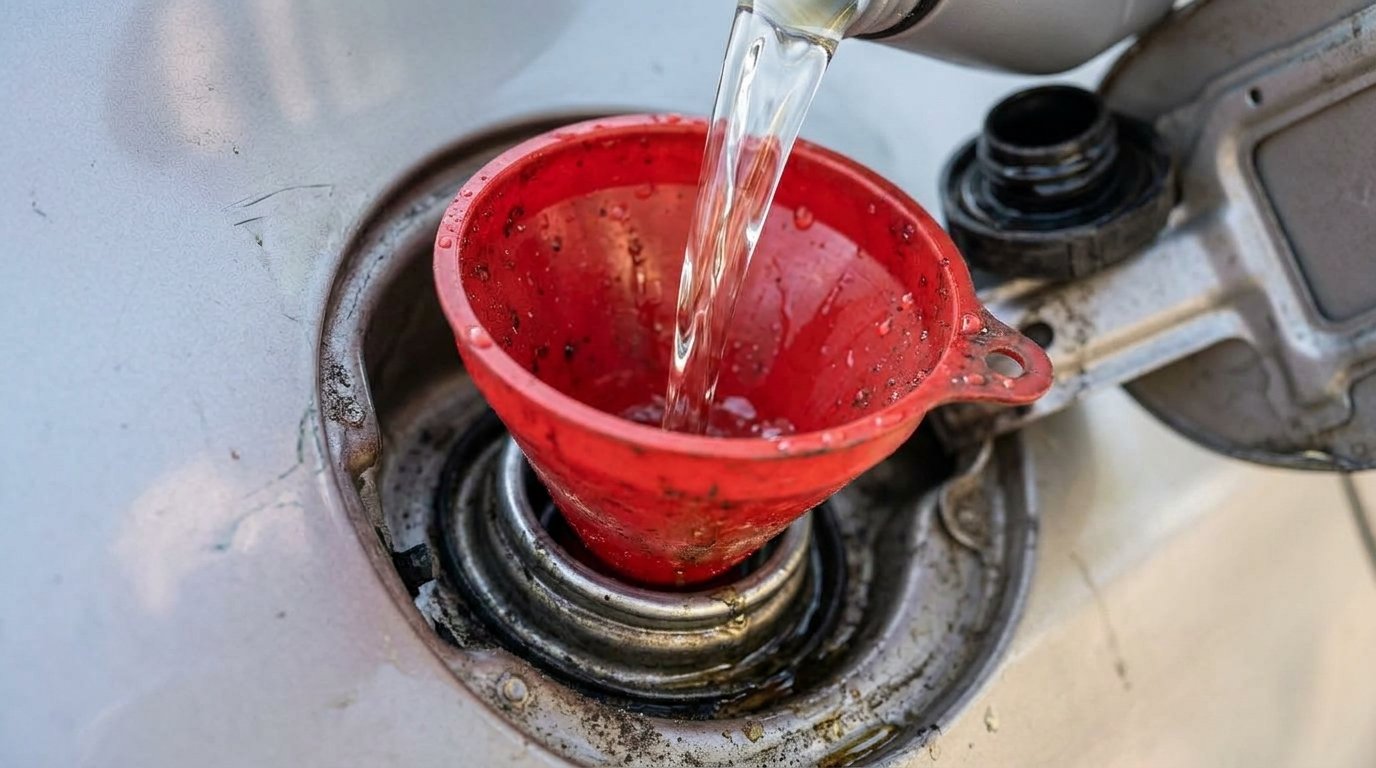
- Pour the entire bottle of Cataclean into the gas tank.
- Drive the car for 10–15 minutes at highway speeds (or keep the RPMs above 2,500) to push the chemical through the exhaust system and burn off carbon.
- After driving, clear the P0420 code using an OBD2 scanner (see our Best OBD2 Scanners guide).
Method 2: The Lacquer Thinner Trick (Risky)
This is an old mechanic's trick. It works because lacquer thinner is a harsh solvent that burns hotter than gasoline, which can melt away carbon deposits in the converter.
How to do it:
- Fill your gas tank to about half full.
- Pour one gallon of standard lacquer thinner into the gas tank.
- Immediately drive the car at highway speeds (65+ MPH) for 30–40 minutes.
Method 3: Dish Soap & Water (Off-Car Only)
If you are a serious DIYer and you remove the converter from the car yourself, you can try washing it out.
- Remove the converter from the exhaust system.
- Mix a strong solution of hot water and dish soap (or a degreaser like Simple Green).
- Pour it directly into one end and let it soak for 30 minutes.
- Flush it thoroughly with a garden hose until the water runs clear.
- Let it dry completely before reinstalling.
When Cleaning Isn't Enough
If you've tried cleaning the converter and the P0420 code returns within 50 miles, or if the car still feels severely underpowered, the converter is done.
A replacement costs $1,000 to $3,500 depending on your vehicle. We break down exact pricing by car model, OEM vs. aftermarket parts, and insurance coverage for stolen converters in our complete guide: Catalytic Converter Replacement Cost (2026 US Guide).
Frequently Asked Questions (US)
Can you clean a catalytic converter without removing it?
Yes, you can use a fuel additive like Cataclean or lacquer thinner poured into the gas tank. However, this only helps if the converter is lightly clogged with carbon. It will not fix a physically damaged, melted, or oil-fouled converter.
Does Cataclean actually work?
Cataclean is a legitimate product that can help dissolve mild carbon buildup. It works best as a preventative maintenance step or for very early-stage P0420 codes, not for a completely clogged converter.
How do you know if your catalytic converter is clogged?
Common symptoms include a severe loss of engine power (especially going uphill), a glowing red converter under the car at night, a rotten egg/sulfur smell, rattling noises, and a P0420 check engine light.
Can I use lacquer thinner to clean my catalytic converter?
Some DIYers add a gallon of lacquer thinner to a half-tank of gas and drive at high RPMs to burn off carbon. While it can work for mild clogs, it is highly risky. It can damage fuel system seals and O2 sensors, and in extreme cases, cause a fire.
Is it cheaper to clean or replace a catalytic converter?
Cleaning is much cheaper ($20–$150). However, if the internal honeycomb is melted or coated in oil, cleaning will not work, and you will need a replacement ($1,000–$3,500). See our catalytic converter replacement cost guide for details.